











Canada’s best engineering schools for 2027 are the University of British Columbia, the University of Toronto, and McGill University. Engineering is a cornerstone of innovation, and Canada is home to some of the world’s most esteemed engineering schools, known for rigorous academics, research, and industry connections.
These schools prepare engineers for fields from artificial intelligence to sustainable energy. Whether you want a traditional discipline or an emerging one, Canada’s best engineering schools offer plenty of options, and our guide to the best civil engineering schools in Canada goes deeper into one field. Read the University Magazine rankings methodology and see our university rankings for context.
The Best Engineering Schools In Canada 2027
1. University of British Columbia

The University of British Columbia teaches engineering through its Faculty of Applied Science, one of its first three faculties alongside Arts and Agriculture. By 1920, it awarded Bachelor of Applied Science degrees. Engineering runs at the Vancouver campus and at UBC Okanagan in Kelowna, which opened in 2005 and has its own engineering management and education building.
The School of Biomedical Engineering, created in 2017 as the university’s first inter-faculty school, links applied science with medicine. TRIUMF, Canada’s national particle and nuclear physics laboratory, sits on campus. University-wide, UBC placed 40th in the QS 2026 world rankings and 41st in Times Higher Education in 2024.
2. University of Toronto

The University of Toronto grounds its engineering in the Faculty of Applied Science and Engineering, which traces back to the School of Practical Science of 1878 and goes by the nickname Skule. In 2024-25, it admitted 1,347 new students through direct entry. The University of Toronto Institute for Aerospace Studies is part of the faculty and has had a satellite campus in North York since 1960.
University work has shaped computing: AlexNet, a deep convolutional network, came from Toronto, and student teams built the AeroVelo Atlas, which won the 2013 Sikorsky human-powered helicopter prize. The university enrolls 102,431 students and placed 29th in the QS 2026 world rankings, second in Canada after McGill.
3. McGill University

McGill University received its royal charter on March 31, 1821, and sits in Montreal. Engineering is among its six largest faculties and enrolls about 10% of all students (3,992 out of 39,920 in 2024). It is a major research university, with sponsored research income above $547 million in 2016.
McGill placed 27th in the QS 2026 world rankings, first in Canada, and 41st in Times Higher Education that year, both university-wide. Researchers belong to about 75 major research centres and networks, and the university holds one of the country’s largest patent portfolios. It also placed 74th in the 2024 Academic Ranking of World Universities.
4. University of Alberta

The University of Alberta opened in Edmonton in 1908 with 45 students. Its Faculty of Engineering lets students specialize in chemical, civil, computer, electrical, engineering physics, materials, mechanical, mechatronics, mining, or petroleum engineering. The university enrolled about 44,059 full-time equivalent students in 2023-24.
Engineering professor Karl Clark developed the hot-water process for separating bitumen from oil sands in the 1920s, and more than 1,000 researchers now work on oil sands issues, from carbon capture to tailings-pond reclamation. The university houses over 400 research laboratories and ranked 96th in the QS 2025 world rankings, fourth in Canada. Sponsored research income reached $513 million in 2017, and Research Infosource ranked it fifth in Canada in 2018.
5. University of Waterloo

The University of Waterloo runs the world’s largest post-secondary co-op program, with more than 20,000 undergraduates enrolled. In engineering, work terms are mandatory: students complete five of six scheduled work terms across eight study terms, a path that takes four and two-thirds years. In 2018, co-op students earned an average of CA$12,100 per work term in Canada.
The engineering story began with the Waterloo College Associate Faculties, created on April 4, 1956, which admitted students in July 1957. Today the university hosts the Institute for Quantum Computing and the Waterloo Institute for Nanotechnology. QS ranked Waterloo 24th in the world for graduate employability in 2022, second in Canada.
6. McMaster University

McMaster University established its Faculty of Engineering in 1958, a few decades after moving from Toronto to Hamilton in 1930. About 37,256 students attended in 2024-25. The McMaster Nuclear Reactor began operating in 1959 as the Commonwealth’s first university-based research reactor, and its licence runs until June 30, 2044.
The reactor supports research, medical isotope production, and nuclear engineering students. The engineering fireball emblem, adopted in 1960, comes from the coat of arms of the former Hamilton College. McMaster ranked 116th in Times Higher Education in 2025 and 146th in the 2025-26 U.S. News global ranking; both rankings are university-wide.
7. Queen’s University at Kingston

Queen’s University received its royal charter on October 16, 1841, and held its first classes on March 7, 1842, with two professors and 15 students. The Faculty of Engineering and Applied Science, known as Smith Engineering, was the second largest program by enrolment in 2009, with 3,097 students.
The Engineering Society, formed in 1897, has about 3,000 members and oversees about 45 student-run initiatives. Sandford Fleming, who first proposed a universal time standard, served as chancellor. Research strengths include the GeoEngineering Centre and a Coastal Engineering Lab. For more on student safety, see our guide to the college campuses with the lowest crime rate. Queen’s ranked 179th in QS 2027 and 9th in Canada.
8. University of Calgary
The University of Calgary was established on April 26, 1966, and its Schulich School of Engineering is one of 14 faculties. The Canadian Natural Resources Limited Engineering Complex, home to the school, was repurposed and renovated in 2016. The university had 35,582 full-time equivalent students in 2023-24.
The Schulich Leader Scholarship, which the university joined in 2011, gives one $80,000 award each year to a student entering the Schulich School of Engineering. The school’s top students are named Schulich Scholars. Calgary ranked 182nd in the QS 2024 world rankings, 8th in Canada, and 5th among medical-doctoral universities in Maclean’s 2026.
9. Université de Montréal

Polytechnique Montréal, affiliated with the Université de Montréal, is where the university’s engineering happens. Founded in 1873, it is described as one of the three largest engineering schools in Canada and the largest in Quebec. Twelve undergraduate programs run through seven departments, including chemical, civil, electrical, computer and software, mechanical, and engineering physics.
The school also has a Biomedical Engineering Institute and operates a SLOWPOKE-2 reactor, licensed until 2033. A reference profile reports about 4,993 undergraduates and 1,917 postgraduates. Among U15 engineering faculties, it has led Canada in Canada Research Chairs and NSERC industry-partnership grants. Classes are taught in French, in the heart of Montreal.
10. Western University

Western University was founded on March 7, 1878, in London, Ontario, and added its engineering faculty in 1957 as the Faculty of Engineering Science. About 37,875 students attend. The WindEEE Dome, located in the Advanced Manufacturing Park, is described as the world’s first hexagonal wind tunnel and can simulate tornadoes and downbursts.
Research is a strength: Research Infosource ranked Western 10th among Canadian research universities in 2018, with $249.7 million in sponsored research. QS ranked it 114th worldwide in 2024, sixth in Canada, and 43rd for graduate employability in 2022. Students looking for work experience can use this guide to find internship opportunities.
11. Concordia University

Concordia University houses the Gina Cody School of Engineering and Computer Science, named after alumna Gina Cody, who donated $15 million in 2018. It is described as the first engineering school named for a woman in Canada and globally. In 2022-23, the school had 11,848 students and more than 50 undergraduate and graduate programs, accredited by the Canadian Engineering Accreditation Board.
Concordia’s Institute for Co-operative Education offers paid, full-time work terms of 12 to 17 weeks, and co-op students usually graduate with at least 12 months of relevant experience. The university was formed in 1974 through the merger of Loyola College and Sir George Williams University. Maclean’s ranked it ninth among comprehensive universities in October 2023.
12. University of Ottawa

The University of Ottawa began in 1848 as the College of Bytown and is officially bilingual in English and French. Most courses are offered in both languages, and students don’t need to be bilingual. The Faculty of Engineering is housed in Colonel By Hall, which opened in 2005 on the main campus, and the university has about 48,800 students.
The university introduced co-op in 1980 and reports a placement success rate above 98 percent, making it the second-largest co-op program in Ontario. It placed ninth in Canada in QS 2025 and eighth in Times Higher Education 2025.
13. University of Victoria

The University of Victoria offers biomedical, civil, computer, electrical, mechanical, and software engineering through its Faculty of Engineering and Computer Science. The faculty admits about 400 students into first-year programs each year. The university was established in 1963 and traces its roots to Victoria College, founded in 1903.
About 17,919 full-time equivalent students attended in 2024-25, a smaller scale than the big research universities. Maclean’s placed UVic second in its comprehensive category in 2023, and Times Higher Education ranked it 181st in the world for employability in 2022, eighth in Canada. QS placed it 349th in the world in 2025.
14. Simon Fraser University

Simon Fraser University opened in 1965, when its first semester began on September 9 with 2,500 students. The Faculty of Applied Sciences is based in the Applied Sciences Building on the Burnaby campus, with engineering also in Surrey. A five-floor, LEED Gold building there opened on April 25, 2019.
The Surrey building covers 20,458 square metres, houses engineering and computer labs, and mainly supports the Sustainable Energy Engineering program, which serves 440 full-time students. SFU had 22,543 full-time equivalent students in 2024-25 and placed 318th in QS 2024. It ranked first in Canada and 18th worldwide in the WURI 2022 innovation ranking.
15. University of Saskatchewan

The University of Saskatchewan opened in 1907 and added its College of Engineering in 1912. Brown and Vallance designed the first engineering building in 1910-12; it expanded in 1913 and 1920 and was rebuilt after a fire in 1925. About 26,694 students attend the Saskatoon campus.
The Canadian Light Source, the national synchrotron facility, opened on campus on October 22, 2004, and is about the size of a football field. Engineering students interested in chemistry and chemical engineering have a strong research base nearby. Times Higher Education placed the university 351st to 400th in 2024. Our guide to prioritizing college tasks includes time-management tips.
16. University of Guelph

The University of Guelph was formed on May 8, 1964, from the Ontario Agricultural College (1874), the Macdonald Institute (1903), and the Ontario Veterinary College (1922). In 1989, the College of Physical Science merged with the OAC School of Engineering to form the College of Engineering and Physical Sciences. Engineering now has its own college.
That agricultural background shapes the work: Guelph ranked first in Canada for total research dollars in Maclean’s 2025 and second among comprehensive research universities in Research Infosource 2024. About 30,634 students attend. QS placed its veterinary science sixth in the world and agriculture and forestry 30th in 2025.
17. Carleton University

Carleton University was founded in 1942 as Carleton College in Ottawa. Its Faculty of Engineering and Design offered its first engineering courses in 1945 and four-year degrees from 1956. It now offers 20 undergraduate programs (BEng, BAS, BID, BIT, and BMPD) plus 37 graduate programs.
Aerospace stands out: the program is described as one of Canada’s first undergraduate programs focused on aerospace, with four streams, from aerodynamics to space systems design. For comparison, see our look at aerospace engineering in the UK. In 2019, Maclean’s ranked engineering seventh in Canada, and a double major is one way to widen your degree.
18. York University

York University was established in 1959 and is based at the Keele Campus in northern Toronto. The Lassonde School of Engineering offers the BEng, and the university also includes colleges such as Norman Bethune College, which focuses on engineering, science, and technology studies. York enrolls about 53,500 to 55,700 students, depending on the count.
Graduates enter a broad job market in the Toronto region; see our list of Canada’s most employable degrees. York ranked 322nd in QS 2027, 14th in Canada, and 401st-500th in Times Higher Education in 2025. Calumet College is associated with technology and the arts, and U.S. News placed York 17th in Canada in 2024-25.
19. Université Laval

Université Laval traces its roots to the Séminaire de Québec, founded in 1663, and received a royal charter on December 8, 1852. The campus is in Quebec City, and about 47,690 students attend. Engineering sits within the Faculty of Science and Engineering and is taught mainly in French.
Laval is the only university in Quebec that trains forestry engineers, and its forestry operations program includes a co-op specialization. The university ranks among the top ten Canadian universities for research funding. The campus lies in the Sainte-Foy-Sillery-Cap-Rouge borough of Quebec City and counts about 33,430 undergraduates and 14,260 postgraduates. François de Montmorency-Laval founded the Séminaire and gave the university its name.
20. Université de Sherbrooke

Université de Sherbrooke was founded in 1954 as a French-language university in Sherbrooke, Quebec, and enrolled about 31,000 students in 2022. Its Faculty of Engineering offers chemical, civil, electrical, computer, biotechnology, robotics, building, and mechanical engineering.
Students looking at the wider field can see our guide to the best engineering and technology schools in the world. Sherbrooke placed 751st to 800th in QS 2023, and Maclean’s ranked it 15th among medical-doctoral universities that year. Instruction is mainly in French. QS ranked it 24th to 26th in Canada in 2023, U.S. News ranked it 789th worldwide in 2022-23, and the Academic Ranking of World Universities ranked it 501st to 600th in 2022, all university-wide.
21. University of New Brunswick

The University of New Brunswick began in 1785 as the Academy of Liberal Arts and Sciences, and its Faculty of Engineering describes itself as having Canada’s oldest engineering programme. Five departments in Fredericton offer seven accredited programs: civil, chemical, electrical, geodesy and geomatics, geological, mechanical, and software engineering.
The faculty had 920 full-time equivalent students in winter 2021. Times Higher Education placed UNB engineering in the top 250 engineering programmes worldwide in 2023. The university had 10,777 students in 2024-25, with 8,536 in Fredericton and 2,241 in Saint John, so classes feel small by Canadian standards. The faculty opened in the late 1800s and is described as Canada’s first to offer engineering degrees.
22. Memorial University

Memorial University opened in 1925 as Memorial University College in St. John’s and became Memorial University of Newfoundland in 1949. Its Faculty of Engineering and Applied Science offers civil, computer, electrical, and mechanical engineering; a combined ocean and naval architectural engineering degree; engineering management; and process engineering.
Ocean research is a defining strength. The Ocean Engineering Research Centre and the Centre for Risk, Integrity and Safety Engineering sit in the faculty, and Memorial is a partner in the Ocean Frontier Institute with Dalhousie and the University of Prince Edward Island. More than 40 percent of the university’s research is ocean-related, and it has about 19,429 students.
23. University of Regina
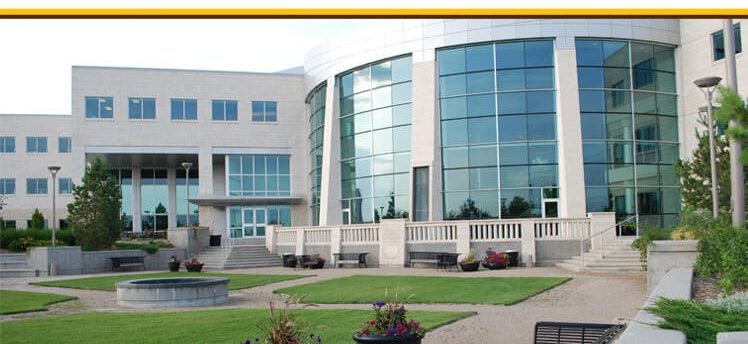
The University of Regina started in 1911 as Regina College, founded by the Methodist Church of Canada, and became an independent university on July 1, 1974. Its Faculty of Engineering and Applied Science offers electronic, environmental, industrial, petroleum, and software systems engineering.
Specializations include communications engineering, controls, digital design, power electronics, manufacturing, and process engineering. The university offers co-operative education, and the highest share of co-op undergraduates is in science and engineering. Record enrolment topped 16,800 students in September 2023. Regina was a college for more than six decades before independence. Fall 2019 enrolment stood at 16,501 students, and the university offers co-operative education.
24. University of Windsor

The University of Windsor began in September 1857 as Assumption College and became the University of Windsor under provincial law on December 19, 1962. The Faculty of Engineering includes departments of civil and environmental engineering; electrical and computer engineering; and mechanical, automotive, and materials engineering.
Windsor partnered with Chrysler in 1996 to create the Automotive Research and Development Centre, a fit for a border city with an automotive history. The university offers nine co-op programs for about 1,100 students. For a US comparison, see our guide to the best mechanical engineering schools in the US. Windsor ranked 547th in QS 2025 and 20th in Canada.
25. Toronto Metropolitan University

Toronto Metropolitan University opened on September 16, 1948, as the Ryerson Institute of Technology with about 250 students. The university announced the new name on April 26, 2022, and made it official in December. The Faculty of Engineering and Architectural Science had 5,949 undergraduates in 2023-24.
The Aerospace Engineering Centre at Downsview Park opened in 2018 through a partnership with Bombardier and the Downsview Aerospace Innovation and Research Consortium, in a 680 square metre former helicopter manufacturing facility. Maclean’s ranked the university eighth in its comprehensive category in 2023. If you study online, see what StudyX offers. The university also runs Zone Learning, a network of 11 business incubators.
26. Lakehead University

Lakehead University grew out of the Lakehead Technical Institute, established in 1946, and became a university when the Lakehead University Act came into force on July 1, 1965. It has campuses in Thunder Bay and Orillia, and engineering is one of nine faculties.
By full-time undergraduate enrollment, engineering is the fourth of six major faculties. In March 2018, Lakehead engineering students took first place in a national competition, according to CBC. The Lakehead University Act received royal assent on June 22, 1965. Reported enrollment is about 7,900 at Thunder Bay and over 1,200 at Orillia, and total enrollment was 6,729 in 2017, including 5,838 undergraduates.
Frequently Asked Questions
What are the best engineering schools in Canada in 2027?
The University of British Columbia, the University of Toronto, McGill University, the University of Alberta, and the University of Waterloo lead this University Magazine list for 2027.
Which Canadian engineering school has the biggest co-op program?
The University of Waterloo runs the world’s largest post-secondary co-op program, with more than 20,000 undergraduates. Engineering students there complete five of six scheduled work terms.
Which Canadian engineering school is the oldest?
The University of New Brunswick’s Faculty of Engineering describes itself as having Canada’s oldest engineering programme. UNB itself was founded in 1785.
Which engineering school in Quebec is the largest?
Polytechnique Montréal, affiliated with the Université de Montréal, is one of Canada’s three largest engineering schools and the largest in Quebec.
Which Canadian engineering schools teach in French?
Polytechnique Montréal, Université Laval, and Université de Sherbrooke teach mainly in French. The University of Ottawa is officially bilingual, with most courses offered in both languages.
Which Canadian engineering school is named after a woman?
Concordia University’s Gina Cody School of Engineering and Computer Science, renamed in 2018 after a $15 million gift from alumna Gina Cody, is described as Canada’s first engineering school named after a woman, and the first globally.
Top 26 Best Universities in Canada 2027: Ranked List
- University of British Columbia
- University of Toronto
- McGill University
- University of Alberta
- University of Waterloo
- McMaster University
- Queen’s University at Kingston
- University of Calgary
- Université de Montréal
- Western University
- Concordia University
- University of Ottawa
- University of Victoria
- Simon Fraser University
- University of Saskatchewan
- University of Guelph
- Carleton University
- York University
- Université Laval
- Université de Sherbrooke
- University of New Brunswick
- Memorial University
- University of Regina
- University of Windsor
- Toronto Metropolitan University
- Lakehead University
Canada’s engineering schools stand as pillars of innovation. Explore Canada’s aerospace engineering schools for a closer look at this field.
Read more about UM World University Rankings










 University Magazine is part of the

